
A Call for Patience & Empathy in Response to National Trauma
As we enter into the 2020-2021 school year, a sense of unease, of uncertainty, hangs above students, parents, and educators alike. For most educators and support staff, it is like their first year all over again. There are new rules, new procedures, and new methods of delivery. It is an altogether new normal, if it can be called that at all. With all of these changes comes anxiety, not only from the rapid acquisition of new methods of instruction, but from the floating fear of the unknown. Will cases rise? Will we be shut down again? Are we equipped to provide the best education, the best services possible if it does?
Many have argued that we have collectively undergone (and are still undergoing) a national, even worldwide, trauma. I can hardly argue with this assertion. With trauma come characteristic symptoms: confusion, disconnection, fear, hopelessness, etc. For some children, school and their classroom are safe havens. Families who deal with food scarcity are often grateful for the meals their children receive at school. Children living in unsafe environments are certain to be missing the routines and security provided by school.
But while the classroom is a safe haven for many students, we must worry about their safety, their health, and their very lives while they are within our walls during this pandemic. Parents are facing similar concerns, similar fears. With the current unemployment rate and economic uncertainty, families are experiencing stress like never before. Adults may try to shield their children from their worries, but our nation’s children are more perceptive than we usually give them credit for. I do not claim to have the answers to whether school should be in-person, virtual, or a hybrid model. I cannot say if the benefits of the traditional classroom outweigh the risks of a rise in cases. What I do propose is that we are patient and empathetic with each other, educators and support staff with parents and students and parents with educators and support staff. We are in this together, all trying to learn and cope with our rapidly changing world in the best ways we know how. It is tough for all of us. As you become frustrated with others and with systems, try to view the world from their eyes, try to walk in their shoes. Most of us are doing the best we can with what we have. While we yearn for what used to be, there has likely been a fundamental shift in the way education will look from now on. There is no way to know for sure, and uncertainly is never comfortable. Allow yourself to feel your emotions, no matter how unpleasant. Just remember, we all share the same goals. Children’s safety is all of our shared primary concern, followed by their learning, both academic and social-emotional. We must work together as a collective and cohesive unit to work through this trauma together, whatever that may look like. Despite all of the uncertainty we all face, I have hope, and I hope you do too.
New on the Blog

Helping Kids Build Empathy: A Skill That Strengthens Friendships, Classrooms, and Families
Empathy is one of the most important social-emotional skills children can learn. When kids understan...
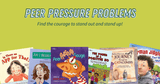
6 Books to Help Handle Peer Pressure
Peer pressure is something every child will encounter at some point - whether it’s subtle encourag...
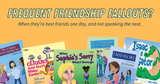
6 Books to Help Kids Navigate Friendship Fallouts
Friendship can be tough. These books help kids handle it. Written by school counselors and packed...

7 Key Steps to Building Self‑Determination for Success
Self‑determination plays a huge role in how we set goals, stay motivated, and bounce back when thing...

Magical Mindset at the Most Magical Time of the Year
For many families, the holidays are the most wonderful time of the year - a magical season filled wi...

Countdown to Winter Break: Helping Students Manage Behaviors
It’s the final stretch before winter break. Hallways and classrooms are buzzing with the anticipatio...