
Safety Rules for Kids Staying Home Alone
As summer progresses and schedules get busier, it might be more tempting to allow children to stay home alone. Waking the whole family for an early baseball or softball game of one family member may seem like more trouble than it’s worth. If you are wondering whether or not your children are old enough to be left alone, first call your Child Protection Services to find out the minimum legal age at which they can be on their own. Then consider their ages and abilities. Determine that they are able to follow directions, and then set up a plan. Practice: "This is what will happen when you are on your own. . . ."
Once you have decided that it is safe to leave your children home alone, teach them about safety issues:
- They should never open the door for anyone (nor peek through the blinds to look);
- Instruct them to stay in the house until you come home;
- Teach your children how to answer the phone and take messages without indicating they are alone;
- Use caller ID or an answering machine to screen calls;
- Have a plan of action in case something goes wrong; your children should know emergency numbers, parents' work numbers, and numbers of neighbors or relatives who could step in;
- Practice what they would do and say if they needed to call 9-1-1. Tell them to give their full name, address, and telephone number, and to stay on the line until instructed by emergency personnel to hang up;
- To make them feel more secure, consider creating a "safe room" by installing a deadbolt and keeping a cellular phone in a designated room (be sure to have a key hidden outside the room in case someone gets locked in accidentally);
- If possible, have a neighbor or relative check in regularly, or have your children check in with that person. Perhaps you could pay someone to be a contact person with whom your children could be in regular contact;
- Go over fire procedures and practice escaping by two routes from every room;
- Don't make your children responsible for food preparation. Have food that can be heated in the microwave or eaten cold from the refrigerator;
- Don't allow your children to have company.
Don't forget to address behavior issues:
- Make your expectations clear;
- Make rules or consequences that you can enforce: It may sound good to tell your child that he or she can't watch TV all week, but if you're not there to monitor, it is difficult to police;
- Let your children help make your house rules: They are less likely to break them;
- Go over the rules periodically, and post them in a prominent place;
- Call home at unpredictable times to see how they are doing, but also to let them know you will be checking up;
- Give them a few household jobs to do while you are at work;
If you are hesitant about leaving your children home alone, consider programs at community and recreation centers, churches, YMCAs and YWCAs, summer parks and recreation programs, and the public schools. Perhaps you can get together with other working parents in your neighborhood to hire a responsible college student to come to your homes.
A final warning: Statistics indicate that unsupervised kids are at greater risk of accident, harm by strangers, siblings, or friends, and are more apt to commit crimes than those under the care of an adult. Experts strongly recommend that you not leave children under 10 at home alone for any extended period of time.
New on the Blog

Helping Kids Build Empathy: A Skill That Strengthens Friendships, Classrooms, and Families
Empathy is one of the most important social-emotional skills children can learn. When kids understan...
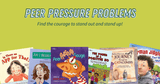
6 Books to Help Handle Peer Pressure
Peer pressure is something every child will encounter at some point - whether it’s subtle encourag...
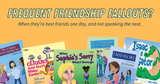
6 Books to Help Kids Navigate Friendship Fallouts
Friendship can be tough. These books help kids handle it. Written by school counselors and packed...

7 Key Steps to Building Self‑Determination for Success
Self‑determination plays a huge role in how we set goals, stay motivated, and bounce back when thing...

Magical Mindset at the Most Magical Time of the Year
For many families, the holidays are the most wonderful time of the year - a magical season filled wi...
Countdown to Winter Break: Helping Students Manage Behaviors
It’s the final stretch before winter break. Hallways and classrooms are buzzing with the anticipatio...