
Summer Days... Reading Ways!
As spring approaches and images of warm breezes, budding trees, and outdoor social activities beckon, the allure of isolated and reclusive hobbies wane. This is especially true for students who spend more than 1,200 hours between August and May focused on learning, and their mentors who spend considerably more time preparing for, planning, and facilitating the learning process. For these individuals, the end of the school year marks the beginning of an 8-10 week “brain break” from all things academia. While some may still choose reading as summer pastime, others will eagerly forsake it in lieu of other, high-spirted amusement.
Let’s not fool ourselves….setting aside time for recreation is important; and medical experts recommend that kids and adults alike get a minimum of 60 minutes of aerobic, muscle strengthening, and bone strengthening activity each day. For students however, increased physical movement and lengthy departures from intellectual activities can take its toll; and for many elementary and middle school students, long recesses from learning can lead to lapses in reading skills. Research shows that routine reading and exposure to print leads to easier phonological processing, increased reading fluency, growth in reading vocabulary, and subsequently better comprehension. While high expectations and calculated efforts by teachers at the beginning of the school year can help remediate the effects of summer deterioration, there are things that can be done prior to and during the summer months to reduce achievement gaps.
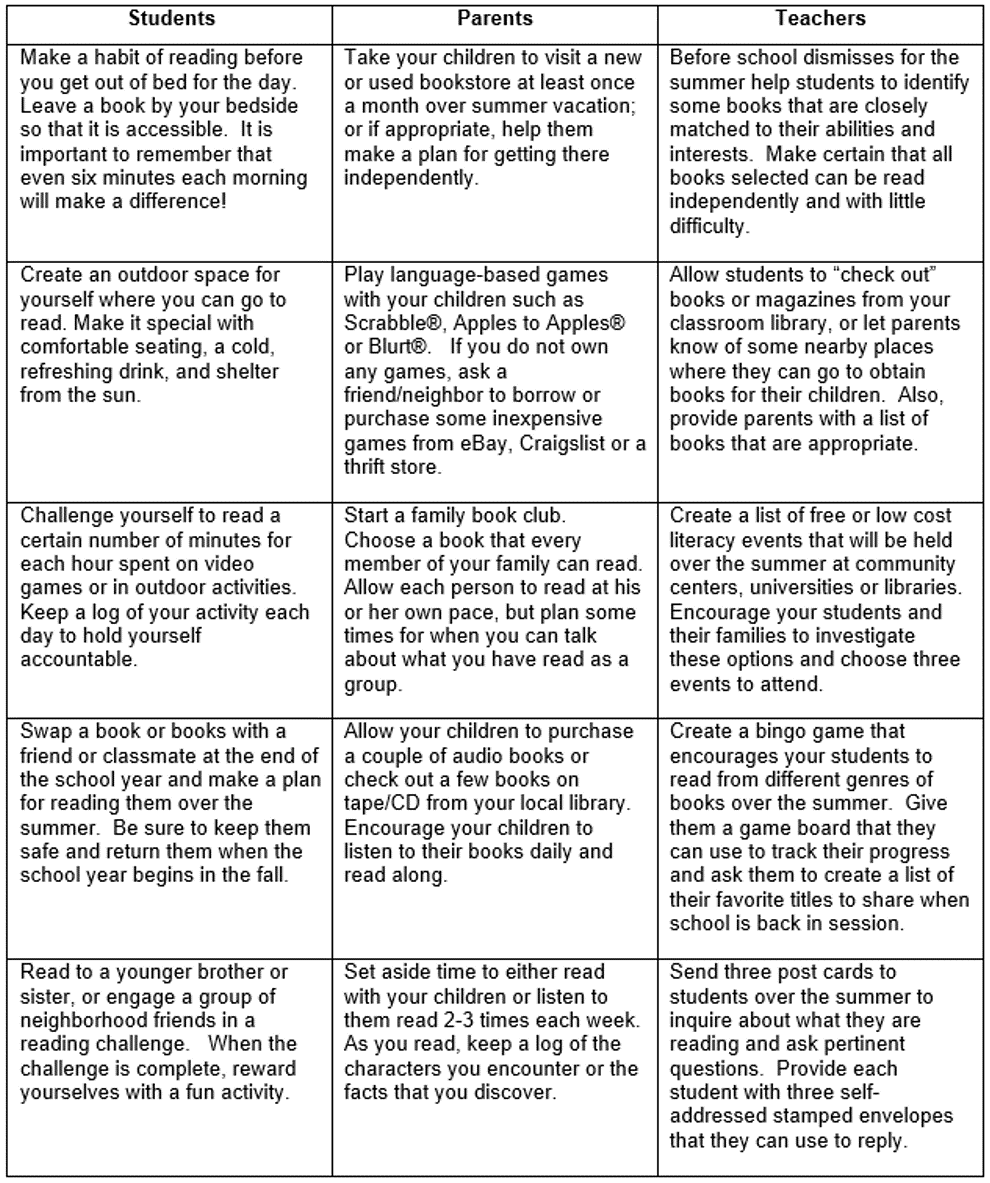
Here are some strategies that students, parents, and teachers can try:
New on the Blog

Ask the Experts: Internet Safety for Elementary-Age Children
What are some simple internet safety rules every elementary-age child should know? In today’s digita...

Turn Awareness into Action: Why Dyslexia & ADHD Awareness Month Matters
With the school year now in full swing, what are you noticing? October is often when behavior an...

Ask the Experts: Building Resilience and Confidence in Children
How can parents build resilience and confidence in their children? When our children experience big...

Uphill Reading: A Book of Encouragement for Tough Days
Most children begin a new school year feeling hopeful and excited. Okay, maybe “excited” is overstat...

Goodbye Summer, Hello Stress? Not So Fast
This isn’t just another back-to-school blog. Well, maybe it is. But only sorta. Here’s why… Back-to-...

Supporting Children’s Mental Health at Home, School, and Beyond
What does a “good day” look like for a child? For some kids, a good day means feeling calm instead o...